
COMMUNICATION METHODS
From a paper written by Tim Buckley
“Narcissism,” NVC’s founder Marshall Rosenberg would say, “is a diagnosis.”
The thought: “He’s a narcissist” creates separation between me (the judge) and you (the object.)
As soon as those thoughts enter our minds – good and bad, right and wrong – we are knocking at moral judgment’s front door.
Instead of labeling the other person as a narcissist, it’s possible (with practice) to refrain from knocking on that door altogether. Instead, as NVC teaches us: • Form an observation: “Every time I spoke to my brother-in-law last weekend, he talked about his accomplishments and didn’t ask me once about what I think, how I am or what I’ve been doing.”
Any time we call someone a name or force an issue because we believe we are right, or we judge or dismiss another’s beliefs, appearance, or behavior as bad or wrong we are making moralistic judgments.
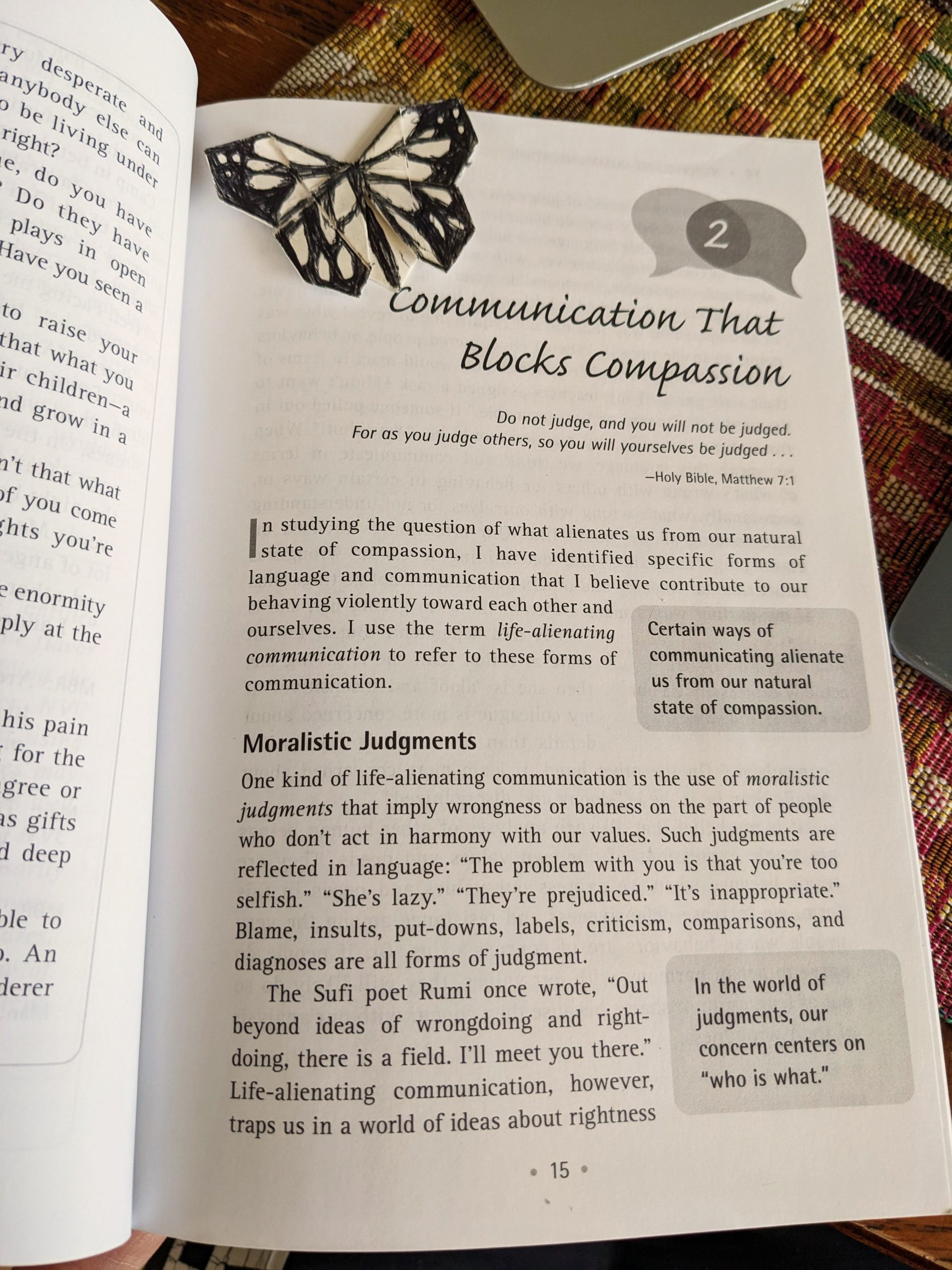
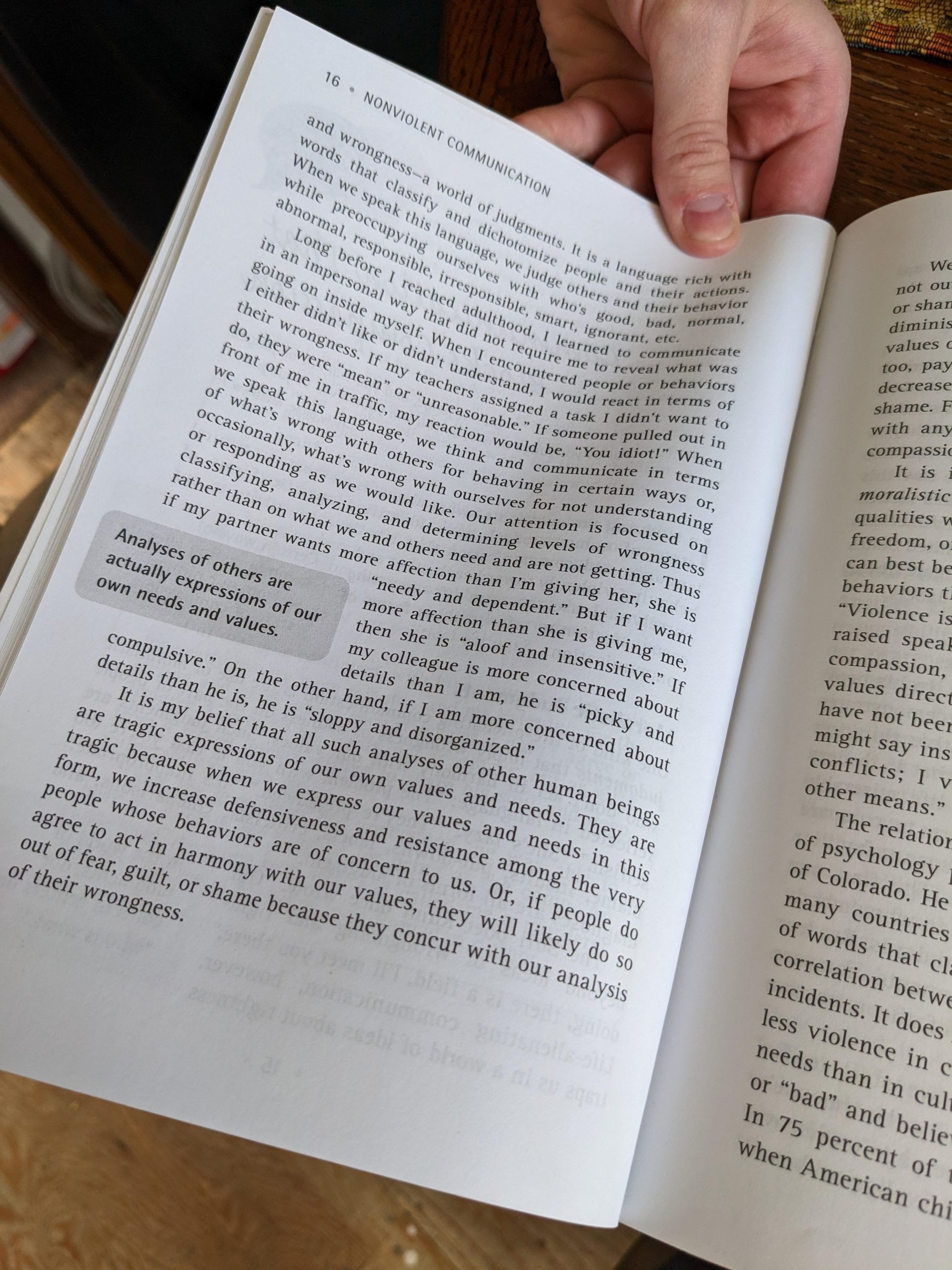
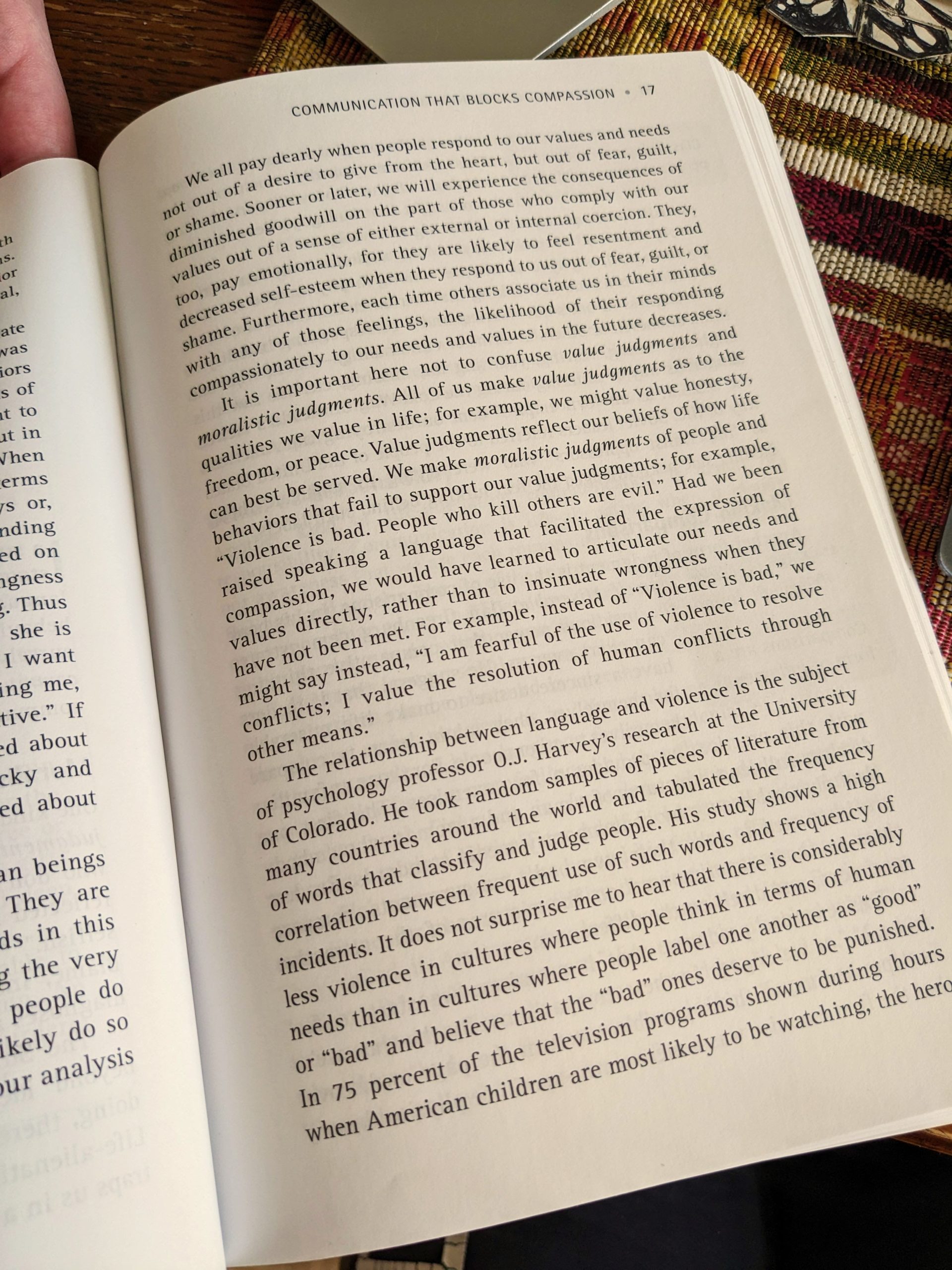
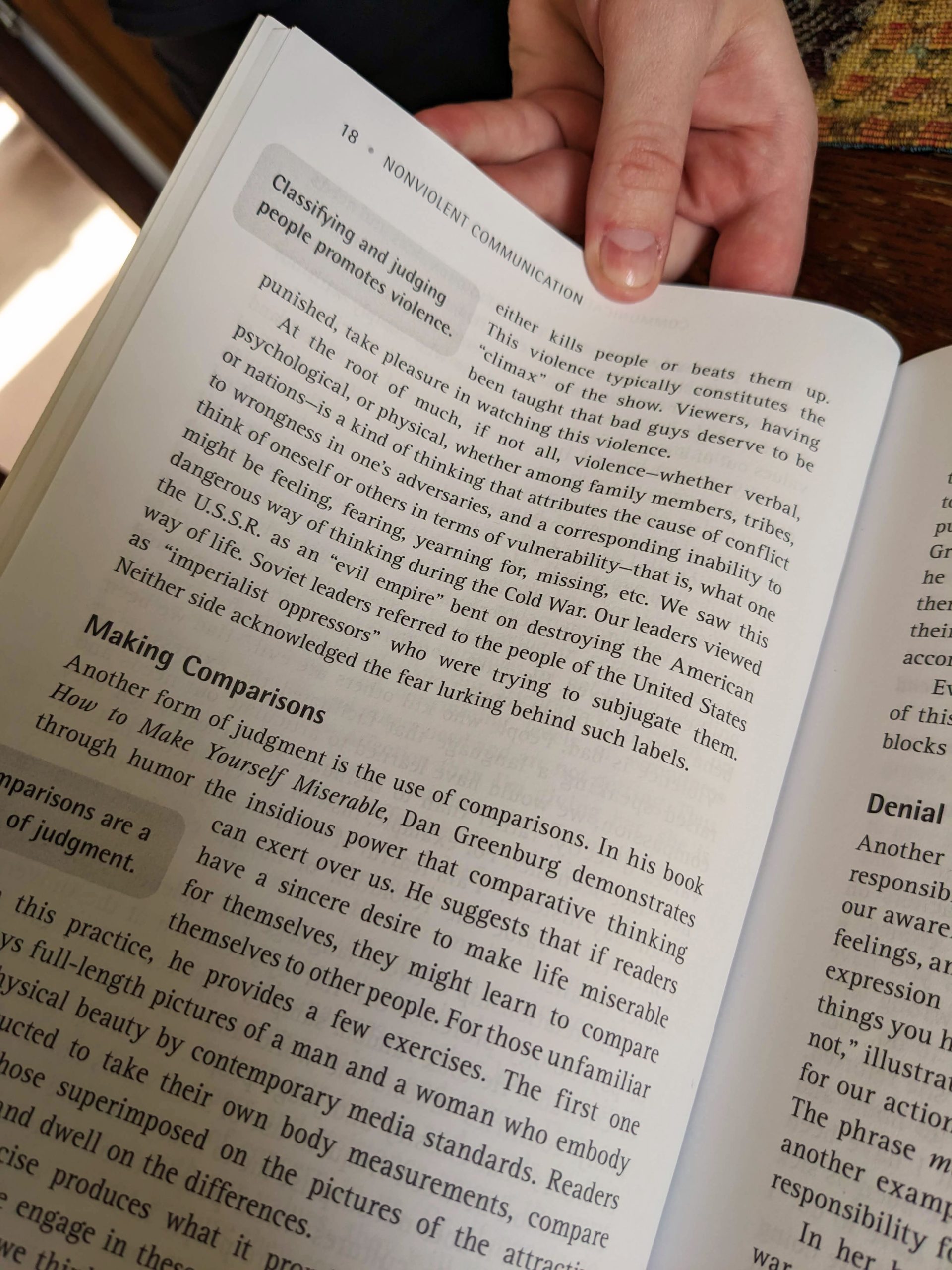
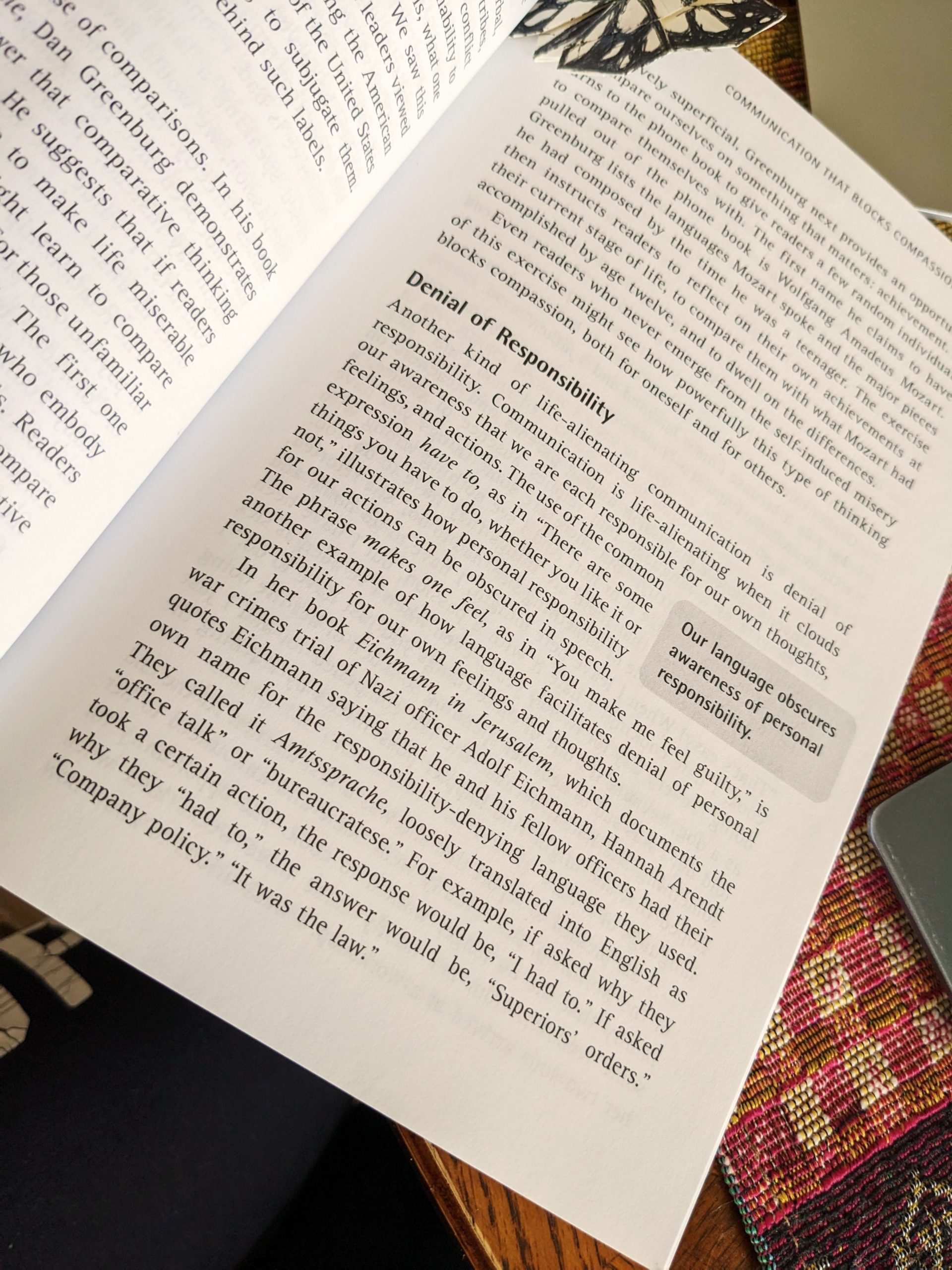
In his book, Dr. Rosenberg wrote:
Life alienating communication… traps us into a world of ideas about rightness and wrongness—a world of judgments. It is a language rich with words that classify and dichotomize people and their actions. When we speak this language, we judge others and their behavior while preoccupying ourselves with who’s good, bad, normal, abnormal, responsible, irresponsible, smart, ignorant, etc.3
“Narcissism,” NVC’s founder Marshall Rosenberg would say, “is a diagnosis.”
Dr. Rosenberg observes our culture teaching us how to think in ways that use these negative judgments partly to stop the discomfort we feel around others who don’t appear to share our values.
Are there other reasons?
Referred to as moralistic judgments because they’re based on beliefs about who (the labeler/judger) is right or wrong and who (the labeled/judged) is good or bad.
There is no one set of tools available for teaching nonviolent communication. However, some techniques and exercises are common. For example:
- In the initial stage of training, a list of judgments, needs, and feelings may be given to participants so that they can learn to distinguish between them and respond more accurately.
- Participants may be asked to read, relate, or role-play a conflict situation, after which they practice identifying the unmet needs of all persons involved.
- Language-reframing exercises may be employed to foster more honest expression of feelings and needs. Among other things, participants may be taught to:
- Watch for sweeping judgments, such as “You always…” or “You never…” and replace these with more specific, concrete observations.
- Own their feelings (e.g. “I feel…”) instead of blaming others for them (e.g. “You make me feel…”).
- Focus less on what we are (e.g. labels and diagnoses such as “nerd” and “abnormal”) and more on how we are.
- Avoid language that suppresses choice, such as “must,” “should,” and “have to.”