And here was our afternoon…
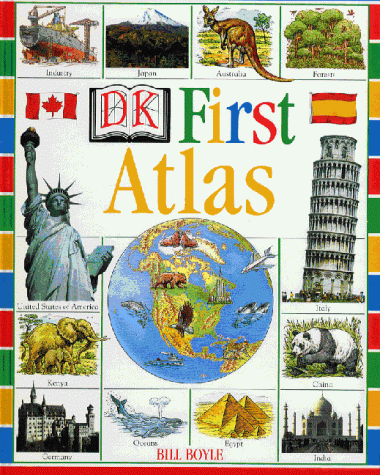
We talked about Africa, primarily Eastern Africa, and the region surrounding Kenya, where a friend Lily made last fall spends a fair portion of her time.
We also read:

We’re exploring these topics, specifically on a global perspective. She’s learned that 100 cents = 1 dollar, and we’re beginning our exploration on currencies that extend beyond the USD, the Canadian Dollar, and the Mexican Dollar.
The idea here is to transition into a point where not only is money being integrated in her concepts and discoveries related to percentages and fractions, but also to encourage her to dive head first into a realm of understanding of finances, financial management, and general $ IQ.
When Russ finally awoke, after an all night festival at Nambe and Alcade, NM, we got some food and then hit the rocks. We’d discussed Bandelier, but read a review and saw some imagery that suggested we might enjoy Tsankawi a bit better. It’s definitely less coordination and formality, and we had a blast. I think we’ll return tomorrow for more exploration and climbing.
Tsankawi

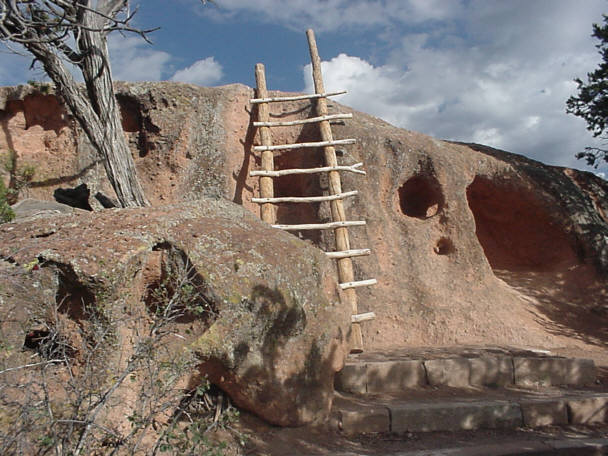
At Tsankawi you can hike the same trails used by the Ancestral Pueblo people. NPS Photo by Sally King The Tsankawi section of Bandelier National Monument is located on State Highway 4 twelve miles from the main section of the park. At Tsankawi you take a 1.5 mile walk along a mesa, viewing cavates, petroglyphs and the Ancestral Pueblo village of Tsankawi. Ladders are a required part of this trail. The trail is very exposed to the elements and should not be taken during localized thunderstorms. Cold, snowy weather can make the trail slippery so extra care should be taken when visiting in winter. 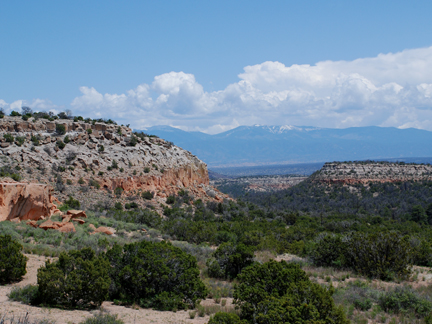
Did You Know?
|

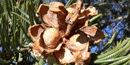 Pinon nuts are rich in vitamins, flavor, and calories (3,000 per pound). Although produced in abundance only every 7 to 10 years, these nuts were a valuable native food source for the Ancestral Pueblo people.
Ancestral Pueblo Native Plant Use
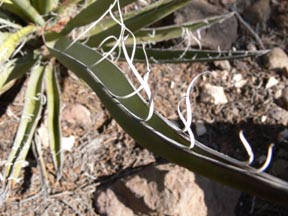
Yucca leaves are very fibrous and provide the material to make rope, baskets, and sandals. NPS Photo by Sally King Although Ancestral Pueblo people were not totally reliant upon gathering like their predecessors, the Paleo-Indians, they still depended upon native plants to supplement their diet and numerous other uses. 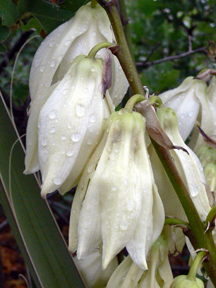
Yucca flowers are sweet and edible. NPS Photo by Sally King Yucca leaves are stiff and full of fibers. The yucca leaves were collected and stripped of fibers. The fibers were then woven into sandals, baskets, or rope. Twine made from yucca fiber was twisted with wet turkey feathers or strips of rabbit fur to made nice warm blankets. Imagine curling up on a cold winter’s night under a nice warm thick turkey feather blanket you had just made. The people could chew one end of a short length of yucca leaf, exposing the fibers and producing paintbrushes for decorating pottery. If you’ve ever accidentally backed into a yucca plant you know a sharp, hard point tips each leaf. These sharp leaf ends could be used as needles for sewing when combined with the fibrous threads from the leaves. 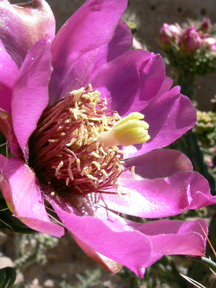
During Ancestral Pueblo times the blooms of the cholla cactus were eaten and provided calcium in their diet. NPS Photo by Sally King Walking Stick or Cane Cholla 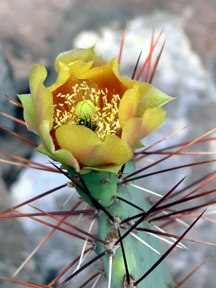
Prickly pears are a good source of food but all parts, except the blossoms, are covered with fine thorns. NPS Photo by Sally King Prickly Pear Cactus 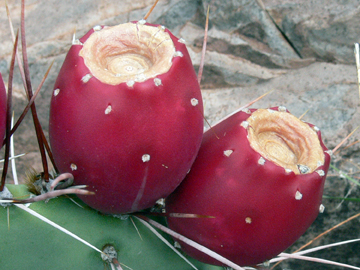
Prickly pear cactus fruits are called tunas. They are sweet and edible. NPS Photo by Sally King
Did You Know?
|
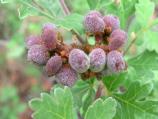
 A drink that tastes a lot like lemonade can be made from the berries of the Three-leaf Sumac. From this, the bush gets its common name, the Lemonade Bush.
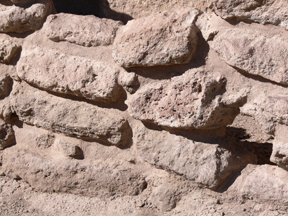
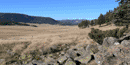 The Valles Caldera is the collapsed summit of the Jemez Volcano which erupted over 1 million years ago. Ash from this volcano formed the volcanic tuff from which the Ancestral Pueblo people built their homes.
Did You Know?
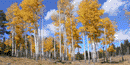 All the aspens in a cluster will change colors at approximately the same time. That’s because in a grouping of aspens, most are clones that grew as root sprouts from the original plant.
History & Culture
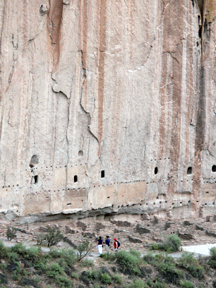
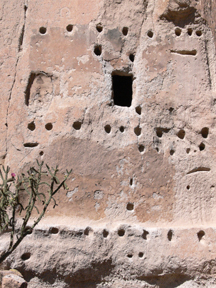
Rows of viga holes show that Long House was once a two to three story structure. NPS Photo by Sally King Bandelier’s human history extends back for over 10,000 years when nomadic hunter-gatherers followed migrating wildlife across the mesas and canyons. By 1150 CE Ancestral Pueblo people began to build more permanent settlements. Reminders of these past times are still evident in the park as are the strong ties of the modern Pueblo people. By 1550 the Ancestral Pueblo people had moved from their homes here to pueblos along the Rio Grande (Cochiti, San Felipe, San Ildefonso, Santa Clara, Santo Domingo). 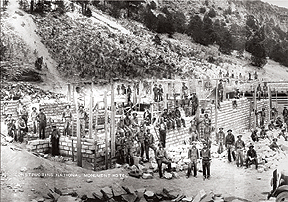
CCC workers take a break while building the new lodge at Bandelier. NPS Photo In 1916 legislation to create Bandelier National Monument was signed by President Woodrow Wilson. In 1925 Evelyn Frey and her husband, George, arrived to take over the Ranch of the 10 Elders that had been built by Judge Abbott in 1907. Between 1934 and 1941 workers from the Civilian Conservation Corps (CCC) worked from a camp constructed in Frijoles Canyon. Among their accomplishments is the road into Frijoles Canyon, the current visitor center, a new lodge, and miles of trails. For several years during World War II the park was closed to the public and the Bandelier lodge was used to house Manhattan Project scientists and military personnel.
Click here for Bandelier’s Adminstrative History.
Click here for A Brief History of Ancestral Pueblo Occupation on the Pajarito Plateau |

Ongoing project: Historic Resource Study
and National Register Nomination Read More
Did You Know?
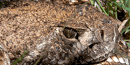 Most rattlesnakes bites are “dry” bites in which little or no venom is produced. That doesn’t mean you want to get bit. Keep your distance if you encounter a rattlesnake while hiking.
People

People have lived in this area for over 10,000 years. Ancestral Pueblo people built homes in the park’s canyons and on the mesas. NPS Photo by Sally King Click the links to the left to find out more about the people who lived in Bandelier. |


- People
-
Paleoindians
Paleoindian hunters were the first humans to use the Pajarito Plateau, arriving here more than 11,000 years ago.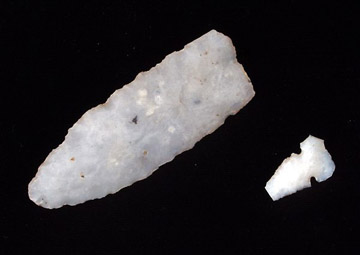
This Clovis point (left side of image) is approximately 12,000 years old. It is one of the oldest artifacts found in Bandelier. The point, mounted on a spear, was used for hunting large animals and was propelled by an atlatl.
NPS Museum Collection
Hunting
Groups of Paleoindians followed the movement of large, now-extinct species of ancient bison and mammoths. For the hunt, they crafted stone spear points and cutting tools, such as the Clovis point seen here. To improve their hunting success, they propelled their sharp spears with an altatl. This tool improved the power and distance a spear could be thrown. Warming temperatures and the extinction of many species of large animals brought an end to the Paleoindian lifestyle. - Archaic Hunter-Gatherers
-
Archaic Hunter-Gatherers

Smaller game such as rabbits and deer became the hunted when larger game such as bison and mammoths became extinct.
photo by sally king
During the Archaic Period (6000 BCE – 1150 CE), nomadic groups of people continued to adapt to a changing climate by eating a more diverse diet of smaller game and many varieties of edible plants, fruits, and nuts.

Fruits and nuts were also an important food source for the Archaic people.
photo by sally king
Gathering
Archaic peoples moved less than their Paleoindian predecessors, but still followed the seasonal availability of important food sources. Here at Bandelier, rabbits, deer, piñon nuts, and wild grass seeds played a major role in Archaic people’s survival. The use of pottery would not have been practical for these nomadic people. Hand-woven yucca and willow baskets were probably used for gathering and storing plants, nuts and other wild foods. Around 1150, the Ancestral Pueblo people began to move into this area from other locations.Did You Know?
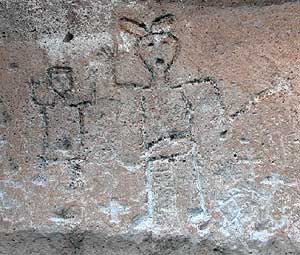
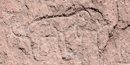 The Ancestral Pueblo people carved petroglyphs into the soft tuff rock above many of the dwellings built along the cliffs.
- Ancestral Pueblo People
-
Ancestral Pueblo People
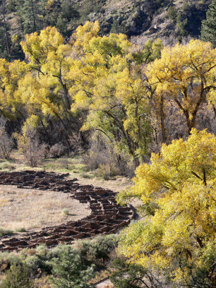
The Ancestral Pueblo people lived in homes built of carved blocks of volcanic tuff. NPS Photo by Sally King Life in Bandelier |
Ancestral Pueblo People – Vital Statistics

Hours spent kneeling and grinding corn took their toll on Ancestral Pueblo knees and arms. NPS Photo by Sally King Size Ancestral Pueblo Home Construction
Did You Know?
|

 Katydids are often called leaf hoppers. Their wings and body look like vegetation, a form of camouflage which offers this insect some protection from predators.
- Pueblo People
-
Pueblo People

Many traditional activities are still a fundamental part of the lives of Pueblo people.
photo by sally king
Continuing the Traditions
Along the Rio Grande, Pueblo people continue to live and adapt with oral traditions and beliefs connecting them with their ancestors.
This Place Knows Us
“We have learned from our ancestors how to honor the land. As Pueblo people we carry on what our ancestors have taught us. Their songs, stories, and spirits are part of this landscape, and we are the continuation of the story.” – Affiliated Pueblo Committee - Mrs. Frey
Mrs Frey and the Bandelier Lodge

Mrs. Frey, with her husband and son, arrived in 1925 to oversee the Ranch of the 10 Elders. NPS Photo The Early Lodge |