We’re embarking on our explorations of the Winter Solstice, Advent time, and how humans have experienced the natural Sleeping Time on our planet over the course of our existence.
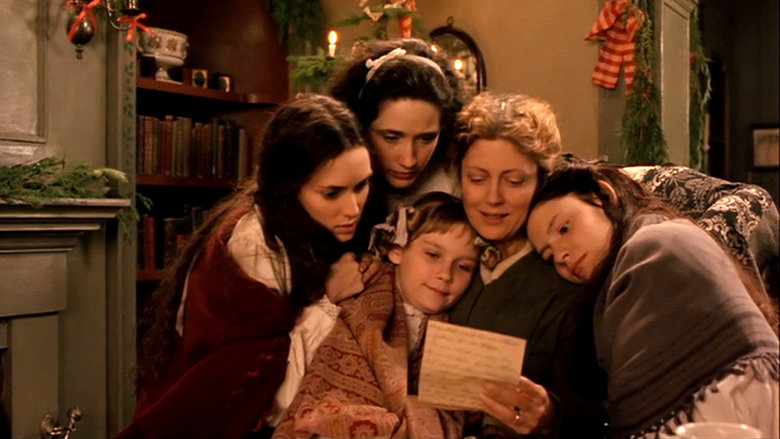
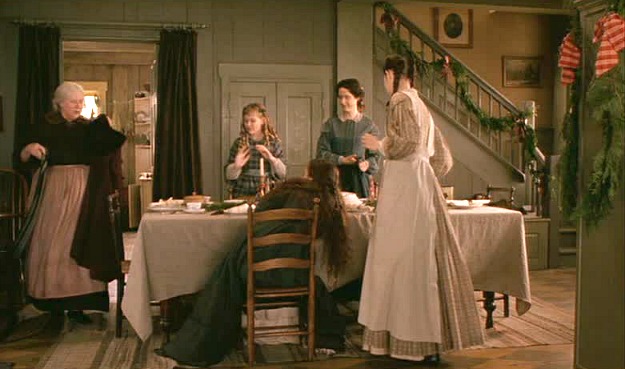
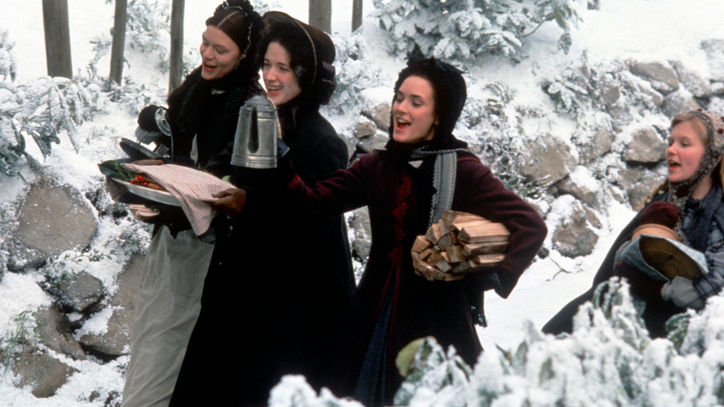
Last night, we watched the 1994 version of Alcott’s, “Little Women” together. Lily seemed to enjoy it, though it was a bit longer than her attention could maintain consistently, so we will probably rewatch the last 1/3 or so today. The movie made in 1994 has quite a few winter scenes that speak to the simple, serene, warm side of this season, and tradition/celebration. Lily indicated yesterday that she’d like to create/begin a couple new traditions that we, as a family, carry out every year during this season, and so, yesterday, we began our first new tradition: we made a food box for the little creatures who remain in our trees and near our home all winter long.
Today we will begin working on our Winter Spiral, which will include candles (probably one for each of the coming weeks until solstice), natural gatherings, and daily discoveries and additions, from the day we celebrate the beauty of appreciation and gratitude, our “Special Time of Appreciating”, until the morning we celebrate Christmas, or what we will begin to call our “Giving”.
Much was learned from this wonderful movie: life before electricity, plumbing, cars, women and men and equality, hardship, war, family, warmth, giving, togetherness, connection, writing, patience, love, loss, wisdom, gentleness, endurance, and the list goes on. So much is embodied here, and so much was received as Lily enthusiastically engaged as we shared it together. Perhaps another tradition was born; perhaps we shall share this sweet story together each years as we begin our winter season, making our little creature food box, and beginning our Winter Spiral and celebrating the warmth and light within.
All this talk of tradition, ancient celebrations and beliefs, superstitions, and understanding of humans over the course of our existence, has led to a thought worthy of our pondering: ancient humans and their intelligence. Giving ancient humans credit for their intelligence is something that our modern society seems to be less inclined to naturally lean toward, but rather we tend to think that we’re the first set of humans with the intelligence that we possess. We often look at previous societies as primitive, dumb, unaware, and perhaps with good reason, as many really seem to have been eclipsed in the “awareness” department. For instance, if we look at the last 1000 years or so, across the globe, we find stories and superstitions that try to explain that which was not understood at that time, and concerns that ruled the daily/seasonal lives of this planet’s human inhabitants.
I propose, and I’m not alone, that while we may have slipped into a dark period of knowing over the last millennia or two, there have been periods of our human history where our collective intelligence, knowledge of our world, and awareness of our existence either matched our present evolution, and/or perhaps surpassed our current position, even significantly.
This ties in with the idea that we have experienced the presence and influence of extra-planetary species over the course of this planet’s existence. When we look at the histories that we do have to reference, the stories, the legends, the lore, we see so many parallels, and so many instances of references of extra-planetary beings interacting with us.
Today we’re exploring the traditions of Advent, the Winter Solstice (as we’re in the northern hemisphere at the moment) and this season, across the various cultures and eras. Many of the rituals still practiced were born out of beliefs and fears associated with survival through seasons and what, at first glance, really appears as ignorance of basic biology and earth science. However, one has to wonder if some of the associated myths could have roots in legitimate experiences of people during these periods of history.
In the course of this exploration, a search for “ancient humans smarter than we think” was conducted, and the results led us to a comment about variable stars, which led us to the ancient Egyptians, and needless to say, a whole host of discoveries and awareness about the seasonal and planetary shifts, and, apparently, the exchange of energy between a pair of stars, a mere 93 light-years from us. The ancients could visibly see this variance, as can we still.. and it was associated with a lunar cycle that was connected to their patterns of good and bad fortune, cycling every 28 days or so. It seems the full moon was positive, while the new/dark moon was viewed as a negative situation – possibly related to human behavior during lighter/darker nights, as well as our circadian rhythms.
This comes full circle for Lily today because, at 6am, she awoke to a need to adjust her bed covers, and I happened to be up. I spoke with her about her observation of it already being light outside, and how we shifted our time to coordinate with the sun recently. She then knelt down to check on Xoomxoom and I commented that the little blue night light she has permanently affixed to his water tub may be messing with him and his circadian rhythm a bit, and that she might be better to not have it there every night, all night long. And now, we will discuss how light effects us and all living things, how the moon’s light has a specific effect on women, on theories that it also has a specific effect on human behavior, and how the pattern of sun time throughout the seasons is something that globally unites humans, across the entire span of our existence. This will bring us back to the beginning of exploring the traditions of this time of year, as we create some new ones of our own.
Ancient Egyptian Calendar Reveals Earliest Record of ‘Demon Star’
 |
 The Demon Star lies some 93 light-years away in the constellation Perseus as one of the eyes of Medusa’s head. (Shown here in Johannes Hevelius’ Perseus from Uranographia.) Credit: Public Domain The Demon Star lies some 93 light-years away in the constellation Perseus as one of the eyes of Medusa’s head. (Shown here in Johannes Hevelius’ Perseus from Uranographia.) Credit: Public Domain |
Ancient Egyptians may have chronicled the flickering of a star known as “the Demon,” perhaps the earliest known record of a variable star, astronomers suggest.
The ancient Egyptians wrote calendars that marked lucky and unlucky days. These predictions were based on astronomical and mythological events thought of as influential for everyday life. The best preserved of these calendars is the Cairo Calendar, a papyrus document dating between 1163 and 1271 B.C. The entry for each day is prefaced by three hieroglyphics that indicate either good or bad luck, with the characters often derived from events of mythology.
Astronomers at the University of Helsinki in Finland had previously discovered that some of the fortunate days recurred in a pattern, every 29.6 days. This almost exactly matches the length of the lunar cycle — the time between two full moons. New moons may have been associated with bad luck.
Dimming demon star
The scientists also detected another pattern in the calendar, one that occurred every 2.85 days. Now the researchers suggest this approximately matches regular dimming of Algol, “the Demon Star,” which lies approximately 93 light-years away in the constellation Perseus as one of the eyes of Medusa’s head. Its name comes from the Arabic phrase, ra’s al-ghul, which means “the demon’s head.”
Algol is the brightest known example of an eclipsing binary system — the large bright member of the system, Beta Persei A, regularly gets eclipsed by the dimmer Beta Persei B. From our point of view, Algol dims by more than a factor of three for 10 hours at a time, dwindling easily seen with the naked eye.
“It seems that the first observation of a variable star was made 3,000 years earlier than was previously thought,” said researcher Lauri Jetsu, an astronomer at the University of Helsinki.
The Cairo Calendar describes how Wedjat, the Eye of Horus, regularly transformed from peaceful to raging, with good or bad influences on life. Horus was the patron god of kings in ancient Egypt. [Gallery: Sun Gods and Goddesses]
“The eclipse seems to be linked with the lucky days, because it represents the pacification of the Eye of Horus,” researcher Sebastian Porceddu, an astronomer and Egyptologist at the University of Helsinki, told LiveScience. “A bright Eye of Horus meant it is raging and a threat to mankind.”
Pinch of salt?
In modern times, Algol actually dims every 2.867 days. The researchers suggest this discrepancy of 0.017 days — about 25 minutes — between ancient Egyptian and modern values for Algol’s dimming may be due to changes Algol may have undergone in the past three millennia. Matter is apparently flowing from the dimmer member of this eclipsing binary to the brighter star, altering their orbit so that eclipses now take longer than they once did. If correct, this ancient Egyptian data could shed light on eclipsing binaries and the details of how such mass transfer might affect their orbits.
“I believe that from now on, Egyptologists will be keeping an eye on possible references to Algol elsewhere,” Porceddu said.
Other scientists are intrigued by the idea, but remain skeptical.
“I think it’s an interesting idea — just how convincing it is is another issue,” astrophysicist Peter Eggleton at Lawrence Livermore National Laboratory, who did not take part in this research, said in an interview.
This pattern “does seem very plausibly attributed to Algol, and the suggestion that it has slowed down by a small amount over 3,000 years is not unreasonable,” Eggleton said. “But you do have to take the idea with a pinch of salt — it’s obviously difficult to pin down what people were really thinking 3,000 years ago.”
The scientists submitted their findings to the journal Astronomy & Astrophysics.